
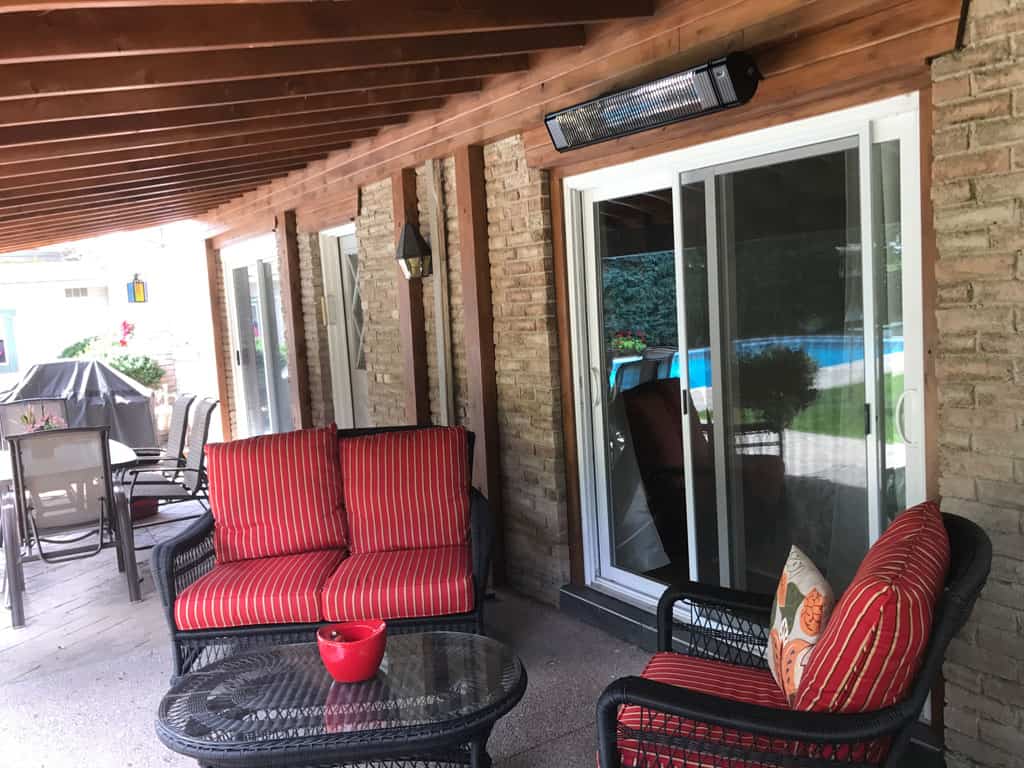
Heating a patio in winter is different from heating an enclosed room. Cold air, wind, open sides, and mounting conditions all change how warmth is felt. The useful question is not whether a heater can raise the temperature of an entire backyard, but whether it can create comfortable warmth where people actually sit, dine, or work.
Can an Outdoor Heater Keep a Patio Comfortable in Winter?
Yes—when the system is planned around the part of the patio people actually use. Electric infrared heaters direct radiant warmth toward people and surfaces instead of trying to heat all the outdoor air. The result depends on weather exposure, coverage, mounting position, and heater output.
What makes a winter setup work
A strong plan keeps useful radiant heat focused on the area people use.
- The seating or dining zone is clearly defined.
- The heater has a clear path to people and nearby surfaces.
- Mounting height and angle follow the model's instructions.
- Multiple units are used when one heater would leave cold spots.
What limits outdoor comfort
Even a powerful heater cannot make every winter patio feel like an indoor room.
- Strong wind and several open sides reduce perceived comfort.
- A heater mounted too high or too far away can feel weak.
- Large areas need enough units to provide even coverage.
- Severe weather may require shelter as well as additional output.
| Aura Series | Best Starting Point For | Light Output | Available Output |
|---|---|---|---|
| Carbon Fiber Series | Open or exposed patios, larger seating areas, and projects where fast, direct warmth is the priority. | Low light | 1,500W, 3,000W, 4,000W, and 6,000W models. |
| Decor Series | Outdoor spaces that need effective radiant heat with a more design-focused appearance and less visible light. | Reduced visible light | 1,500W and 3,000W models. |
| Shadow Series | Enclosed or semi-enclosed outdoor rooms in moderate climates where no visible glow is important. | No light | 1,500W, 2,400W, and 3,200W models. |
Plan the area people use before choosing a model
Measure the area where people will sit or stand, note every open side, record the possible mounting locations, and identify the local winter conditions. Those details are more useful than square footage alone when selecting a series, output, and number of heaters.
Why Infrared Heat Is Useful Outdoors
Infrared heaters produce radiant heat. That energy travels toward people and surfaces in front of the heater, where it is absorbed and felt as warmth. Convection systems work differently: they warm the surrounding air first, which is harder to contain in an open or drafty space.
Wind still matters. It can cool people and surrounding surfaces, so a very exposed patio may need more output, better coverage, or practical wind protection. Infrared heat is useful outdoors because it does not rely on keeping a large volume of warm air trapped in place. For more detail, see how infrared heaters work.
Electric infrared vs. propane patio heating
Propane patio heaters burn fuel and require cylinders, refills, ventilation, and fuel handling. Electric infrared heaters deliver targeted radiant warmth without on-site combustion or portable fuel cylinders. They can also be configured in heating zones. Actual operating cost depends on local energy prices, heater output, and run time, so neither option is automatically cheaper in every location. See the full electric vs. propane patio heater comparison.
What Determines Winter Heating Performance?
Weather exposure
A covered porch with one or two protected sides is easier to heat than a fully open patio in cold, windy conditions. Walls, screens, or other permitted shelter can reduce drafts around the seating area, but the final layout still needs to follow the heater's clearance and installation requirements.
Coverage and line of sight
Radiant heat needs a clear path to the area it is meant to warm. Furniture, structural elements, excessive mounting height, and poor aiming can all reduce useful coverage. On a wide patio, two correctly placed heaters may provide more even comfort than one unit aimed from a distant corner.
Output and zoning
Wattage is important, but it is only one part of the plan. The size and shape of the area being heated, mounting distance, open sides, and typical winter weather all influence the required output. Adjustable controls make it possible to reduce heat in milder conditions and avoid running every zone when only part of the patio is being used.
Realistic comfort goals
Outdoor heaters are designed to improve comfort in a specific zone. They are not intended to maintain one uniform air temperature across an entire open yard. Defining the seating, dining, or work area first leads to a more useful design and a more realistic expectation of performance.
How to Choose a Patio Heater for Winter
- Map the area people use. Measure the seating, dining, counter, or work zone that needs warmth—not every square foot of the patio.
- Classify the exposure. Record the roof or ceiling, number of open sides, wind direction, and the coldest conditions in which the space will be used.
- Choose the heating experience. Decide whether maximum outdoor performance, reduced visible light, or no visible glow is the main priority.
- Confirm the installation. Check the model-specific mounting height, clearances, voltage, controls, and wiring requirements before ordering.
Once these four details are clear, use the comparison above to narrow the product family. Final output and quantity should be based on the actual site rather than a generic square-footage rule.
How Much Does a Winter Patio Heater Cost to Run?
Operating cost depends on the heater's power input, the control setting, your electricity rate, and the number of hours it runs. Use this calculation for a simple estimate:
A 3,000W heater uses 3kW at full output. Multiply 3 by the number of operating hours and your electricity price per kWh. If the heater runs at a lower control level, actual consumption may be lower. Zoning and adjustable output can also prevent energy from being used in an empty part of the patio.
Avoid treating infrared heating as a guaranteed percentage of savings. A fair comparison uses the same heated area, schedule, local energy prices, and comfort target for each system.
Winter Patio Heating Checklist
- Heat the area people use instead of trying to cover the entire yard.
- Use permitted wind protection where it can improve comfort without affecting required clearances.
- Keep people and seating within the heater's intended radiant coverage pattern.
- Use multiple heaters when one unit would create uneven warm and cold areas.
- Choose adjustable controls so output can match the weather and occupancy.
- Keep the emitter and reflector clean according to the maintenance instructions.
- Follow the exact product manual and use a qualified electrician for required hardwired work.
Frequently Asked Questions
Do outdoor heaters work below freezing?
Infrared heaters can still deliver radiant warmth below freezing, but comfort is not determined by air temperature alone. Wind, open sides, mounting distance, coverage, and total heater output all affect the result. The layout should be planned for the actual site and the conditions in which the patio will be used.
What is the best outdoor heater for a small patio in winter?
Patio size alone does not identify the best series. A small but exposed patio may need more direct heat than a larger protected room. Start with exposure and mounting conditions: Carbon Fiber for demanding outdoor applications, Decor when lower light also matters, and Shadow for protected no-light spaces.
How much heater power does a patio need?
There is no reliable one-size-fits-all wattage based only on square footage. Dimensions, mounting height, open sides, wind, local winter conditions, and the shape of the area being heated all matter. Larger or irregular spaces may need more than one heater for even coverage.
Does wind stop an infrared patio heater from working?
No, but strong wind can reduce how comfortable the patio feels by cooling people and nearby surfaces. Infrared heat remains most useful when the heater has a clear path to the seating or gathering area, while practical shelter can help reduce drafts around it.
Can Aura heaters stay outside during winter?
It depends on the exact model and installation. Aura lists Carbon Fiber and Decor models as IP65 rated, but weather resistance does not replace the product manual. Follow the specified electrical requirements, clearances, mounting instructions, and maintenance guidance for the heater being installed.
Plan a Winter Heating Layout for Your Patio
Share the dimensions of the seating or gathering area, possible mounting locations, number of open sides, and typical winter conditions. Aura's team can help narrow down the series, output, and number of heaters that fit the project.