
How Do Infrared Heaters Work?
Infrared heaters have become increasingly popular for their energy efficiency, quick heat delivery, and ability to create a cozy environment in various settings. As a type of electric heater, infrared heaters use radiant heat to create warmth by transferring thermal energy directly to objects without heating the intervening air, similar to the heat from the sun or a fire. But how exactly do these heaters work? Understanding the mechanics behind infrared heaters can help you make informed decisions about using them in your home or workplace.
What is Infrared Heat?
Infrared heat is a type of radiant energy similar to the heat we feel from the sun. It’s part of the electromagnetic spectrum, just beyond the visible light range. Unlike conventional heaters that warm the air, infrared heaters emit infrared radiation, which directly warms objects, people, and surfaces without heating the air in between. This form of heat transfer is known as radiant heating. Radiant heat transfers thermal energy directly to objects without heating the intervening air, similar to the warmth from the sun or a fire.
If you’re interested in learning more about how infrared heat, you can explore further here.
How Electric Infrared Heaters Create Direct Radiant Warmth
Electric infrared heaters work by converting electrical energy into radiant heat. Instead of heating all the air in a room or outdoor area first, infrared heat travels directly from the heater to people, surfaces, furniture, floors, walls, and objects in its path. This is why infrared heating is useful for patios, garages, restaurants, pergolas, outdoor kitchens, and other spaces where targeted comfort matters.
Electricity powers the emitter
Electrical energy flows through the heater’s emitter, such as a carbon fiber, quartz, ceramic, or other infrared heating element.
The emitter produces infrared energy
As the element heats up, it produces infrared radiation, a form of radiant energy that can travel through the air.
The reflector directs the heat
A reflector helps guide the infrared energy outward toward the seating, working, dining, or activity area.
People and surfaces absorb warmth
The radiant energy is absorbed by people and surfaces, creating direct warmth without depending only on heated air.
Why this feels different from forced-air heat
Traditional convection heating warms air first. Infrared heating works differently because the warmth is felt when radiant energy reaches people and surfaces directly.
- Less reliance on circulating warm air.
- Better fit for targeted comfort zones.
- Useful in open, drafty, or semi-outdoor areas.
Where infrared heating works especially well
Infrared heaters are most practical when the goal is to warm a specific area instead of every cubic foot of air in the space.
- Patios, pergolas, and outdoor kitchens.
- Restaurant seating areas and hospitality spaces.
- Garages, workshops, and personal workspaces.
The practical takeaway
Infrared heaters do not make comfort by heating the air first. They create comfort by sending radiant heat directly toward the people and surfaces in the heating zone. Correct heater selection, placement, mounting height, and controls are what turn that principle into efficient real-world performance.
How Infrared Heaters Work
Electric infrared heaters operate on a simple principle: converting electricity into infrared radiation.
Here’s a step-by-step breakdown of the process:
Infrared Emitter
The core component of an infrared heater is the heating element. These heating elements can be made from quartz, carbon, or ceramic materials. When electrical energy flows through the heating element, it heats up and produces infrared radiation.
Reflector
A reflector, typically made of polished metal, is positioned behind the emitter. Its role is to direct the infrared radiation outward, focusing the heat where it’s needed most.
Heat Emission
The emitted infrared radiation travels through the air without heating it. This process is an example of radiant heat, where thermal energy is transferred directly to objects. Instead, it is absorbed by objects, such as furniture, walls, and people. When these objects absorb the infrared radiation, their molecules begin to vibrate, generating heat and warming the surrounding area.
Heating Effect
Because infrared heaters don’t rely on warming the air, they provide a consistent and direct heat source. This makes them particularly effective in spaces where traditional heaters might struggle, such as large, open rooms or outdoor patios.
To see how our cutting-edge technologies are integrated into our products, visit Our Technology page.
Types of Infrared Heaters
Infrared heaters come in several types, each with its specific applications and benefits:
Quartz Infrared Heaters
These heaters use quartz bulbs as the infrared emitter. Quartz heaters are known for their rapid heating capabilities and are often used in residential settings.
Ceramic Infrared Heaters
Ceramic elements are used in these heaters, offering a softer and more evenly distributed heat. They are commonly used for indoor heating, providing a gentle warmth that is ideal for smaller spaces.
Carbon Infrared Heaters
Carbon heaters use carbon fiber elements to emit long-wave infrared radiation. These heaters are durable and efficient, making them suitable for both indoor and outdoor use.
Industrial Infrared Heaters
Industrial infrared heaters are designed for high-temperature applications and are used in industrial settings. They are known for their efficiency and cost-effectiveness, catering to various industrial applications with specific characteristics such as material composition and temperature capabilities.
Benefits of Infrared Heaters
Infrared heating offers several advantages over traditional heating methods:
Energy Efficiency
Infrared heaters reduce energy waste by directly heating objects and people rather than the air. This efficiency translates into lower energy bills, especially in environments where targeted heating is needed.
Instant Heat
Unlike conventional heaters, which take time to warm the air, infrared heaters provide immediate warmth. This makes them ideal for intermittently used spaces, such as workshops, garages, or patios.
Comfort Without Forced Air
Infrared heaters do not rely on fans or blowers to move warm air through the space. This can help create quiet, direct comfort without blowing dust, debris, or air around a patio, garage, workshop, or indoor comfort zone.
Quiet Operation
Since infrared heaters do not rely on fans or blowers, they operate quietly, creating a peaceful environment in your home or workspace.
Applications of Infrared Heaters
The versatility of infrared heaters makes them suitable for a wide range of applications:
Residential Use
Infrared heaters are commonly used in homes to provide warmth in specific rooms or outdoor areas. Their ability to deliver targeted heat makes them a popular choice for patios, sunrooms, and living spaces. Most infrared heaters have low operational costs, making them an economical choice for home use.
Commercial and Industrial Use
In commercial and industrial settings, infrared heaters efficiently heat large, open spaces like warehouses, factories, and outdoor venues. Their direct heating method is especially effective in environments with minimal air circulation.
Outdoor and Semi-Outdoor Comfort
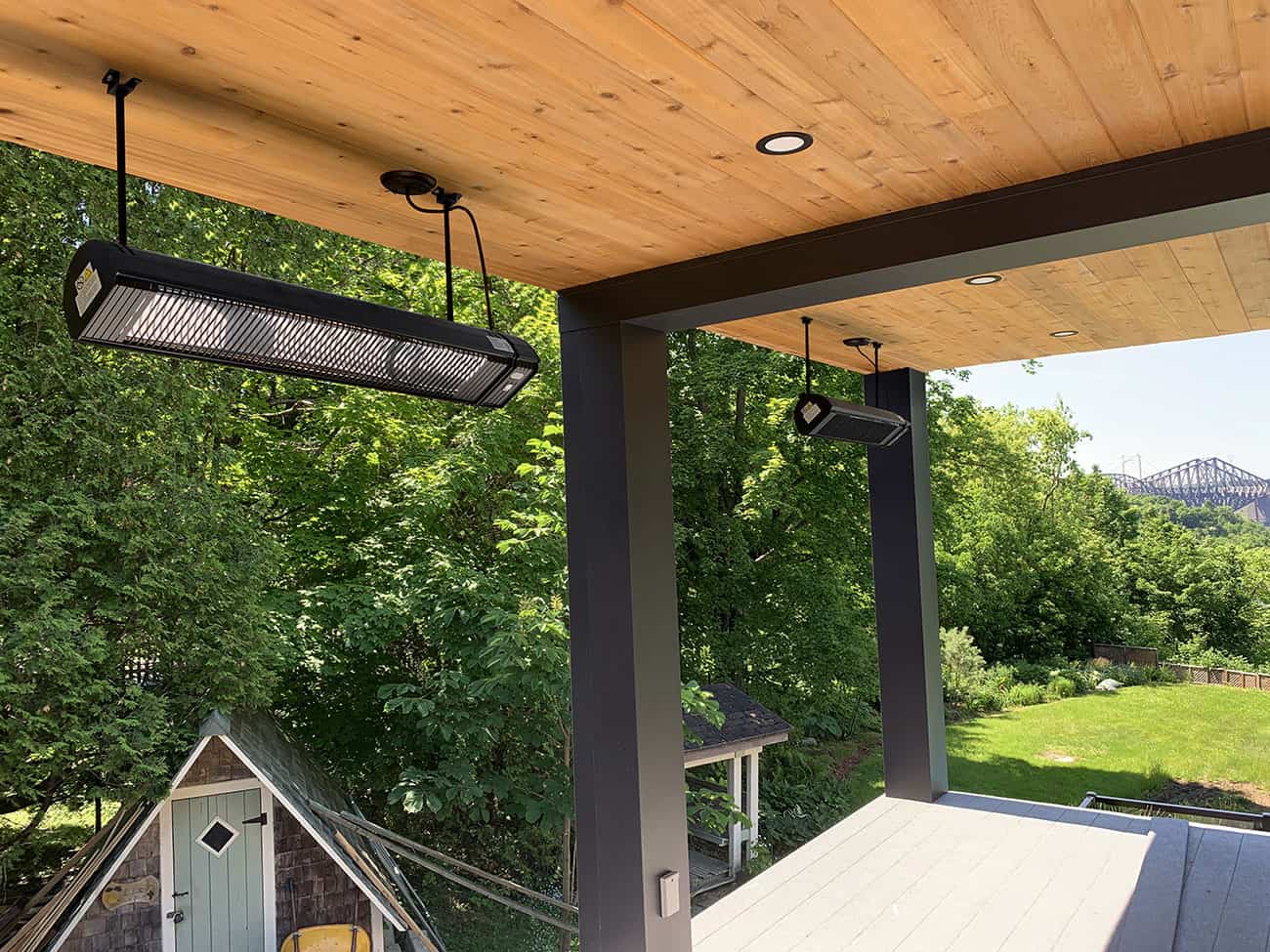
Infrared heaters are often used in patios, pergolas, outdoor kitchens, garages, restaurant seating areas, and other spaces where direct warmth is more practical than trying to heat moving outdoor air.
Conclusion
Infrared heaters offer a unique and efficient way to warm your space. By directly heating objects and people, rather than the air, these heaters provide quick, consistent warmth that can reduce energy costs and create a comfortable environment. Whether for residential, commercial, or therapeutic use, infrared heaters are a smart choice for anyone looking to improve their heating efficiency.
Frequently Asked Questions About How Infrared Heaters Work
Infrared heaters work differently from traditional air-based heating systems. These answers explain how infrared heat is produced, what it warms, and why it is useful for patios, garages, restaurants, pergolas, and outdoor comfort zones.
Do infrared heaters heat the air?
Infrared heaters mainly warm people, objects, and surfaces directly. Some surrounding air may become warmer as those surfaces release heat, but infrared heaters do not depend on heating all the air first.
Why do infrared heaters feel warm so quickly?
Infrared heaters feel warm quickly because radiant energy travels directly from the heater to the people and surfaces in its path. You do not need to wait for the entire room, patio, or garage to warm up before feeling comfort.
Do infrared heaters work outside?
Yes. Electric infrared heaters are commonly used for patios, pergolas, outdoor kitchens, restaurant seating areas, garages, and workshops because they provide direct warmth in spaces where heated air can escape.
What is inside an infrared heater?
Most electric infrared heaters include a heating element or emitter, a reflector, a housing, mounting hardware, and electrical controls. The emitter creates infrared energy, and the reflector helps direct that warmth toward the target area.
Are infrared heaters the same as radiant heaters?
Infrared heaters are a type of radiant heater. They use infrared energy to transfer heat directly to people, objects, and surfaces instead of relying only on heated air circulation.
Where do infrared heaters work best?
Infrared heaters work best in defined comfort zones where direct warmth is needed. Common applications include patios, covered outdoor areas, pergolas, restaurant patios, garages, workshops, outdoor kitchens, and semi-enclosed spaces.
Are infrared heaters efficient?
Infrared heaters can be efficient when used for the right application because they focus warmth directly where people need it. Their real-world performance depends on heater size, placement, mounting height, exposure, controls, and the type of space being heated.
Need help choosing the right infrared heater?
Aura can help homeowners, restaurants, contractors, and designers understand which electric infrared heating solution fits their patio, garage, pergola, outdoor kitchen, or commercial seating area.
If you’re considering adding an infrared heater to your space, exploring the options from Aura Heaters could be a great start. Their range of high-quality, water-resistant heaters is designed to meet various needs, ensuring you stay warm and comfortable no matter the season.