
Find the Best Infrared Heater for Your Space
Compare Aura’s CF, Decor Glass, and Shadow Series for patios, restaurants, garages, workshops, and enclosed living spaces. Start with how the space is used, then narrow the selection by exposure, mounting conditions, available voltage, and heating requirements.
CF Series Fast, directional, low-light heat for outdoor and exposed spaces.
Decor Glass Series Architectural outdoor heating with reduced visible light and connected controls.
Shadow Series No-light radiant comfort for enclosed and protected areas.
Aura provides product guidance, technical information, and documentation for residential and commercial projects.
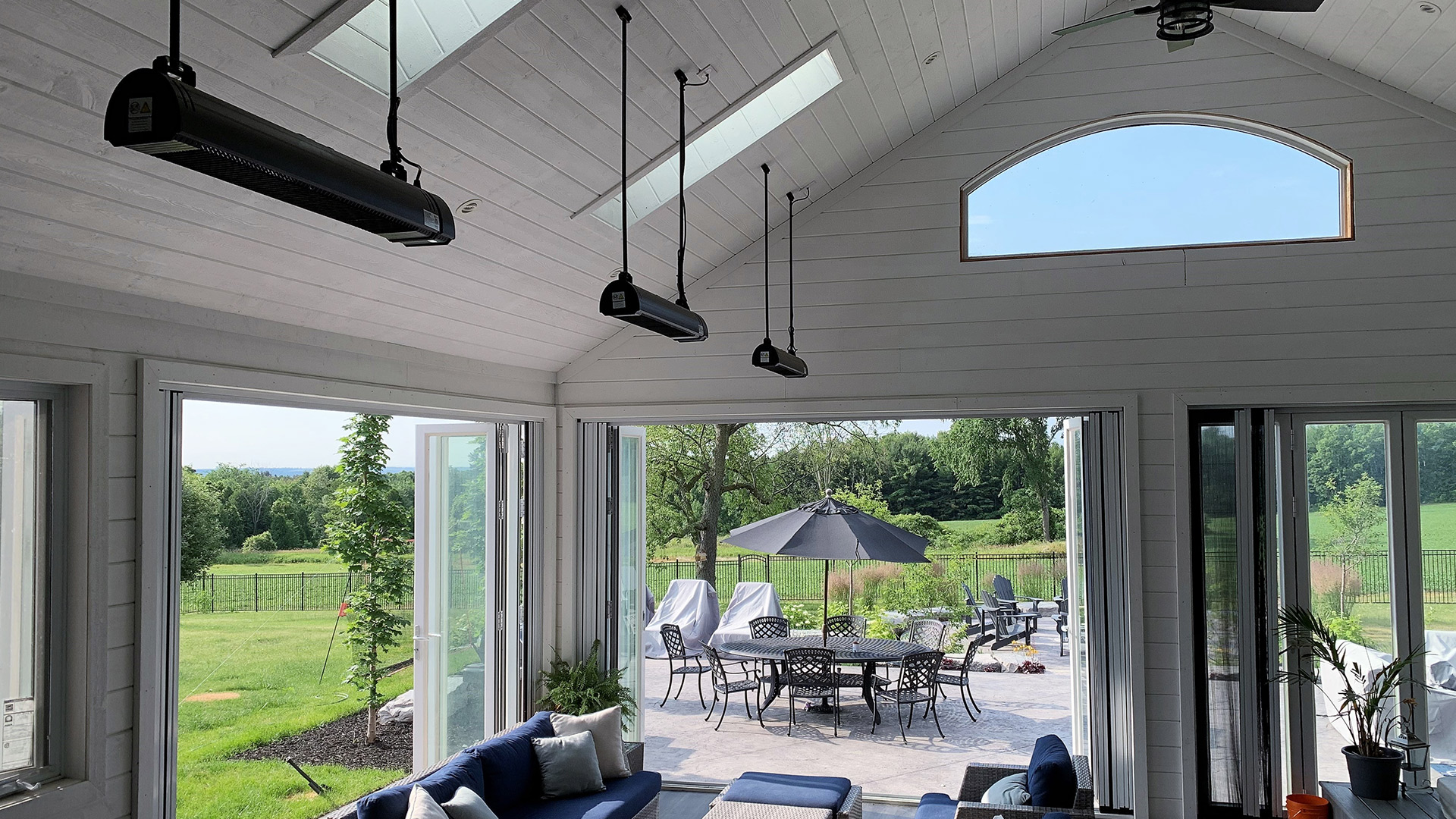
Start With How You Use Your Space
The best infrared heater depends on whether the space is open, protected, design-focused, commercially operated, or exposed to wind. Select the application that most closely matches your project to see the recommended Aura heater series.

Backyard Patios
Add targeted warmth to residential seating, dining, and entertaining areas during cooler spring and fall weather.

Restaurants & Commercial Patios
Extend outdoor dining into cooler weather with a clean, permanently installed electric heating solution.

Outdoor Kitchens
Keep cooking, dining, and entertaining areas comfortable beyond the warmest months of the year.

Pergolas
Heat covered or partially open outdoor living areas based on wind exposure, overhead protection, and design preferences.

Garages & Workshops
Direct radiant warmth toward occupied workbenches, hobby areas, studios, and regularly used garage zones.
Gas Heater Replacement
Replace portable propane or permanently installed gas heaters with targeted electric infrared heating.
Application is the first step. Final series, model, output, and quantity depend on wind exposure, mounting height, occupied-area coverage, available voltage, required clearances, and local installation requirements.
Get help choosing a heaterThree Infrared Heating Series for Different Spaces
Aura offers three distinct infrared heating technologies. Compare the CF, Decor Glass, and Shadow Series based on exposure, visible light, heating response, controls, and the way your space is used.
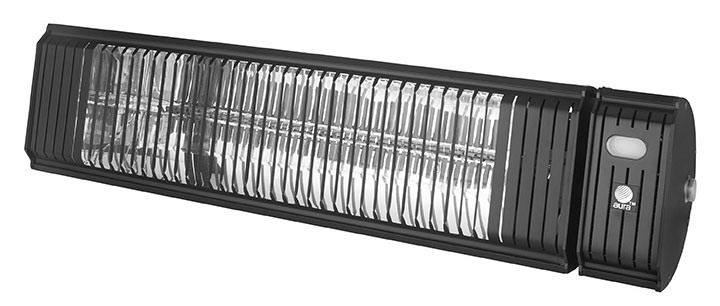
CF Series
Fast, directional infrared heat with low visible light output for residential and commercial areas where heating performance is the primary consideration.
Open patios, exposed pergolas, outdoor kitchens, restaurant terraces, workshops, garages, cottages, and gas heater replacement projects.
- Heat response
- Instant, focused radiant heat
- Visible light
- Low operating glow
- Available output
- Models from 1500W to 6000W
- Controls
- Onboard controls and remote
Choose the CF Series when the space is exposed, the mounting position is higher, or stronger directional performance is more important than eliminating visible light.
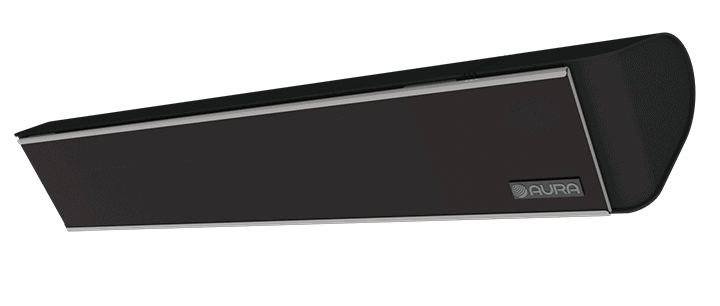
Decor Glass Series
A slim architectural heater that combines directional carbon fiber performance with a ceramic-glass panel designed to further reduce visible light.
Covered patios, restaurant dining areas, outdoor kitchens, hospitality spaces, pergolas, and design-focused residential installations.
- Heat response
- Instant, directional radiant heat
- Visible light
- Reduced through ceramic glass
- Available output
- 1500W and 3000W models
- Controls
- Remote and Bluetooth app control
Choose Decor Glass when heater appearance, lower visible light, and integration with the surrounding architecture are important to the finished project.
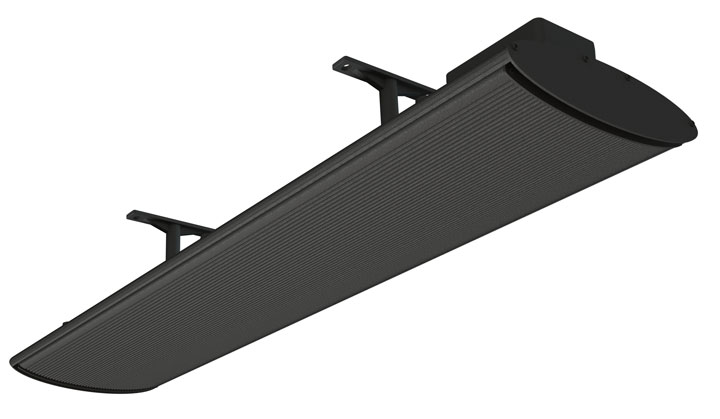
Shadow Series
A no-light infrared panel heater designed for indoor and covered outdoor areas where quiet visual integration and comfortable long-wave radiant warmth are preferred.
Sunrooms, solariums, screened rooms, enclosed garages, studios, workshops, yoga rooms, vestibules, and covered spaces in moderate climates.
- Heat response
- Gradual long-wave radiant comfort
- Visible light
- No visible operating glow
- Available output
- 1500W, 2400W, and 3200W models
- Environment
- Indoor or covered outdoor use
Choose the Shadow Series when no visible glow is a priority and the heater will be installed in an enclosed, protected, or semi-enclosed environment.
Start With Exposure, Light Preference, and Mounting Conditions
Open or windy spaces generally favor the CF Series. Protected, design-focused spaces may favor Decor Glass. Enclosed or covered areas where no visible glow is preferred may be better suited to the Shadow Series.
Best Infrared Heaters for Patios, Pergolas and Outdoor Kitchens
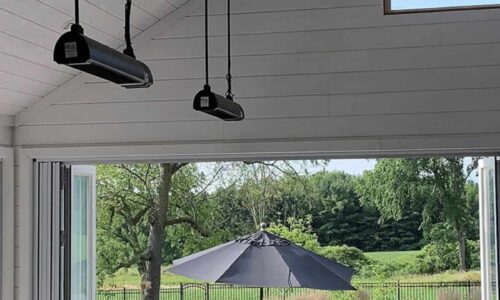
Outdoor heating performance depends on wind exposure, overhead protection, mounting height, heater position, and how people use the space. The CF Series is generally the stronger starting point for open or exposed applications, while the Decor Glass Series is well suited to protected spaces where architectural appearance is also important.
Match the Heater to Exposure and Design
A fully open patio has different heating requirements than a protected pergola or covered extension of the home. More exposed spaces usually benefit from focused radiant performance, while protected spaces may place greater emphasis on appearance and reduced visible light.
- Open patios and partially covered areas
- Locations affected by wind or cooler weather
- Larger or more demanding occupied zones
- Projects replacing portable propane heaters
- Covered pergolas and roofed patios
- Architecturally finished outdoor areas
- Guest-facing residential installations
- Projects where reduced visible light is preferred
Best starting point: CF for greater outdoor exposure; Decor Glass for protected architectural spaces.

Extend Cooking and Dining Comfort Beyond Summer
An outdoor kitchen may include preparation counters, dining tables, lounge seating, and open transitions into the yard. Electric infrared heaters can direct warmth toward these occupied zones without adding portable propane tanks to the layout.
- Kitchens opening directly into an exposed yard
- Dining areas needing stronger radiant coverage
- Cooler-weather residential use
- Projects where heat output is the main priority
- Roofed or structurally protected kitchens
- Architecturally coordinated installations
- Guest-facing dining and entertaining zones
- Projects where appearance and comfort are both priorities
Best starting point: CF for exposed performance; Decor Glass for protected, design-sensitive outdoor kitchens.
Your Space May Require More Than One Heater
Heater quantity and positioning depend on the size and shape of the occupied area, mounting height, wind exposure, available voltage, possible mounting locations, and the requirements of the selected heater model.
Best Infrared Heaters for Restaurants and Commercial Outdoor Spaces
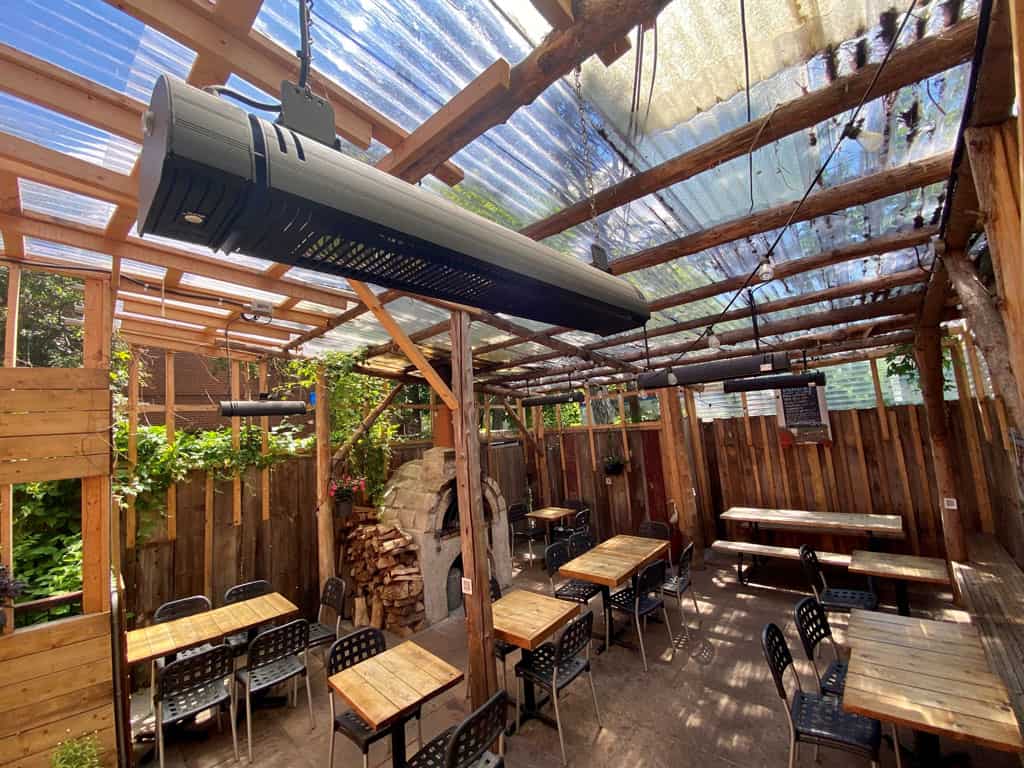
Commercial patios require dependable heat, clean installation, and a system that complements the appearance of the property. The Decor Glass Series is a strong starting point for protected hospitality spaces, while the CF Series is better suited to exposed areas where stronger directional performance is the priority.
Extend Outdoor Dining Into Cooler Months
Electric infrared heating can help restaurants keep outdoor tables comfortable during cooler spring and fall weather without relying on portable propane tanks.
A strong starting point for covered dining patios and hospitality spaces where heater appearance and architectural integration are important.
- Covered restaurant patios
- Guest-facing dining areas
- Design-sensitive installations
- Protected outdoor seating
Better suited to open restaurant patios, perimeter seating, and locations where wind exposure requires stronger focused radiant heat.
- Open or partially exposed patios
- Cooler operating conditions
- Higher-output heating requirements
- Gas or propane heater replacement projects

Match the Heater to the Property and Exposure
Commercial infrared heating may be required for hospitality courtyards, common areas, terraces, entrances, waiting areas, and other frequently occupied spaces around a property.
A practical starting point for exposed commercial spaces where heating performance and targeted coverage are the main priorities.
- Terraces and open courtyards
- Commercial seating areas
- Exposed entrances and waiting zones
- Projects replacing portable gas heaters
A strong option for protected commercial environments where the heaters must complement the building and surrounding design.
- Covered hospitality areas
- Upscale commercial terraces
- Customer-facing common areas
- Architecturally coordinated installations
Permanently installed electric heating avoids the storage, replacement, and movement of portable propane tanks.
Infrared heat can be directed toward occupied dining, seating, and customer areas instead of attempting to heat all surrounding air.
Aura can assist with heater selection, placement considerations, technical documentation, and commercial project planning.
Get Help Selecting the Right Series and Heater Layout
Share your patio dimensions, mounting height, exposure, available voltage, photographs, and project requirements with the Aura team for a more appropriate starting recommendation.
Best Infrared Heaters for Garages, Workshops, Sunrooms and Screened Rooms
Garages, workshops, sunrooms, screened rooms, and extended living spaces have different heating needs than open patios. The right series depends on whether you need focused working-zone heat, comfortable no-light warmth, or a heater that complements a finished space.
Focused Heat Where Work Gets Done
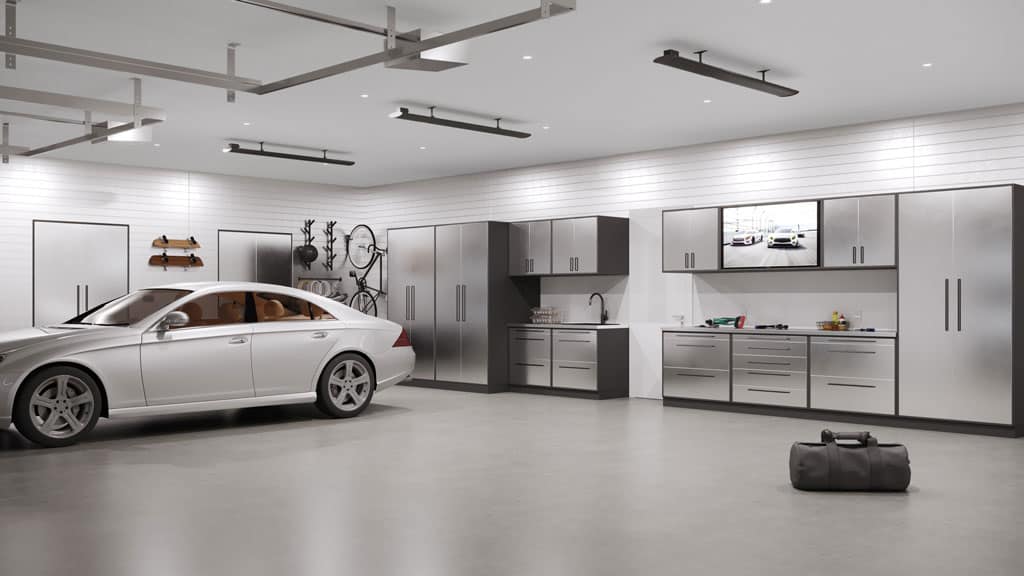
Infrared heaters are well suited to garages and workshops because radiant heat can be directed toward occupied work areas rather than relying only on warming the entire volume of air.
A practical starting point for enclosed garages, studios, hobby rooms, and workshops where comfortable no-light heating is preferred.
- Enclosed garages and workrooms
- Studios and hobby spaces
- Workshops with regular occupancy
- Areas where visible heater glow is undesirable
A stronger option for spot heating, workbenches, partially open garages, or spaces where more directional radiant performance is required.
- Focused workbench heating
- Partially open garages
- Cooler or draft-prone work areas
- Projects needing stronger directional heat
Comfortable Heat for Finished Living Areas
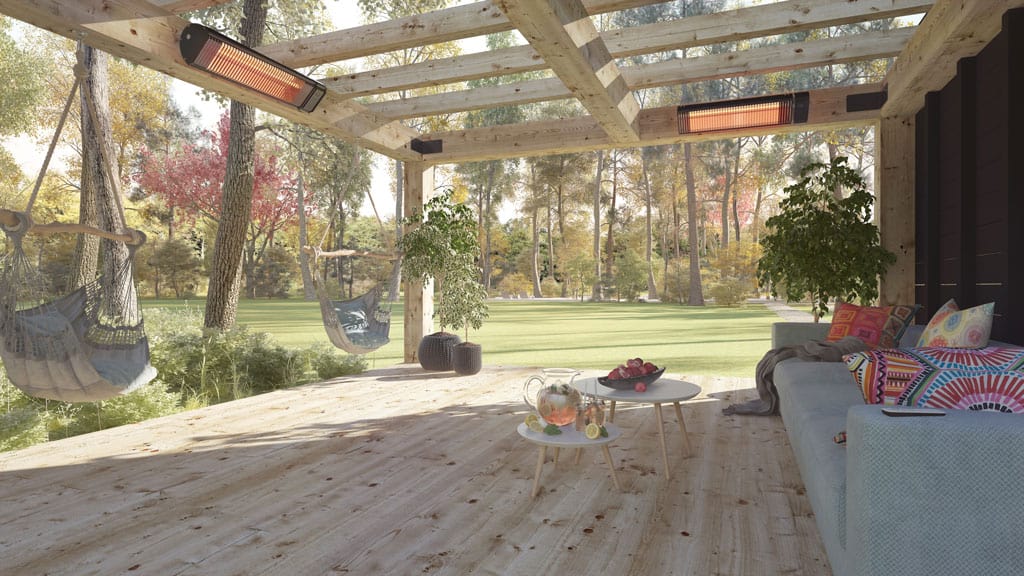
Sunrooms, solariums, screened rooms, studios, and protected patio extensions often require a heater that provides useful comfort without overpowering the design or atmosphere of the space.
A strong starting point for indoor and protected spaces where long-wave radiant comfort and no visible operating glow are important.
- Sunrooms and solariums
- Protected patio extensions
- Yoga and wellness studios
- Finished indoor living areas
A suitable option for protected and semi-enclosed areas where architectural appearance, directional heat, and reduced visible light are priorities.
- Screened rooms and covered porches
- Protected residential living spaces
- Design-sensitive seating areas
- Guest-facing finished environments
Fully enclosed, screened, protected, and partially open spaces respond to radiant heat differently.
A focused workshop zone may need a different heat profile than a sunroom, studio, or comfortable seating area.
Ceiling height, wall position, required clearances, voltage, and heater orientation affect the final recommendation.
Tell Us How the Space Is Enclosed and How You Plan to Use It
Share the room dimensions, photographs, mounting height, available voltage, climate conditions, and location of the occupied area for a more appropriate starting recommendation.

Replace Outdoor Gas Heaters With a Permanent Electric Solution
Aura’s high-output CF Series offers a practical electric infrared heating option for restaurants, commercial patios, hospitality properties, and residential projects moving away from propane or natural gas heaters.
Instead of heating the surrounding air, infrared heaters direct radiant energy toward people, surfaces, and occupied areas. This makes proper placement especially important in open, windy, or exposed environments.
The final model and heater quantity depend on the existing layout, mounting height, exposure, available electrical service, and the size of the area that needs to be heated.
Eliminate routine tank replacement, storage, and movement around guest or residential spaces.
Electric infrared heaters operate without burning propane or natural gas at the point of use.
Create a cleaner, integrated heating system without movable freestanding heaters occupying floor space.
Position heaters to focus warmth on dining tables, seating areas, work zones, or frequently occupied sections of the space.
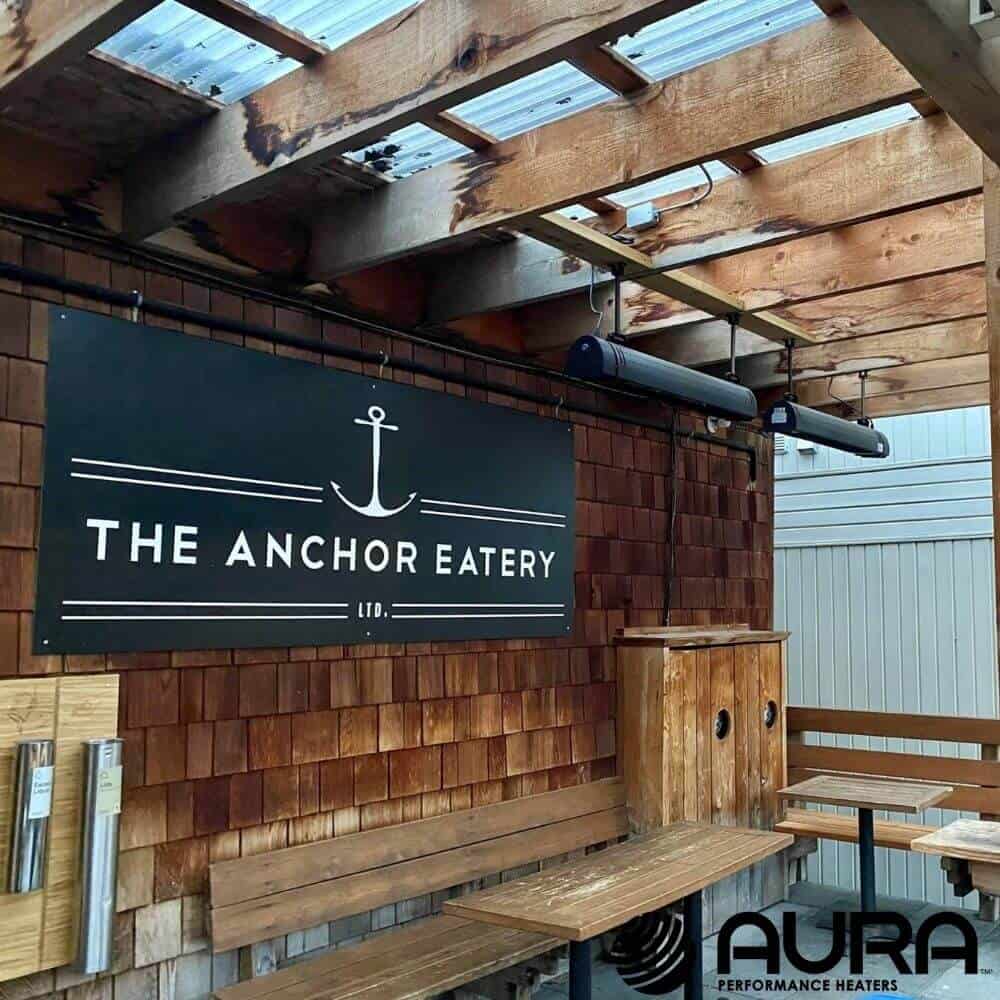
How to Choose the Right Infrared Heater for Your Space
Application type is only the starting point. The final heater series, wattage, quantity, and placement should be selected according to the physical conditions of the space and how the heated area will be used.
Two patios of the same size may require different heating systems when one is protected by walls and a roof while the other is open to wind. Mounting height, available electrical service, clearances, and the position of tables or seating areas must also be considered.
Protected and design-sensitive spaces may place greater importance on lower visible light, architectural integration, and comfortable background warmth.
Wind and Exposure
Open patios, pergolas, commercial terraces, and partially enclosed areas are more affected by outdoor conditions than enclosed rooms.
Mounting Height and Position
The distance between the heater and the occupied area affects heat intensity, coverage, comfort, and the number of heaters required.
Occupied Area and Coverage
Infrared heating should be planned around the areas where people spend time, such as dining tables, seating groups, workbenches, or regularly occupied zones.
Voltage and Electrical Capacity
Available voltage, dedicated circuits, total electrical load, and control requirements influence which heater models can be installed.
Mounting Clearances
Each heater must be installed according to the required distances from ceilings, walls, furnishings, combustible materials, and other surrounding surfaces.
Visible Light and Atmosphere
Some projects prioritize stronger heat performance, while others require minimal visible light or a heater that blends into the surrounding architecture.
Prepare the Basic Details About Your Space
Providing measurements, photographs, mounting height, enclosure details, available voltage, location, and intended use will help the Aura team recommend a more appropriate series and starting layout.
Product Information You Can Verify Before Installation
Choosing the right heater also means confirming its electrical requirements, mounting conditions, clearances, controls, and applicable certifications. Aura provides product-specific information to help homeowners, contractors, designers, and commercial project teams make informed decisions.

Certification information helps contractors and project teams verify that the specified model has been evaluated for applicable U.S. and Canadian requirements.

Product documentation identifies the relevant testing standards associated with the heater model being considered for a project.

Canadian standard information can be reviewed as part of product specification and installation planning.
Product Specifications
Review model dimensions, wattage, voltage, electrical requirements, finishes, controls, and other product-specific details before selecting a heater.
- Model and electrical ratings
- Heater dimensions and finishes
- Control and remote information
- Recommended applications
Installation Manuals
Installation documentation provides the requirements needed to plan the mounting position and complete the installation safely and correctly.
- Required mounting clearances
- Wall and ceiling installation guidance
- Electrical connection requirements
- Operating and safety instructions
Project Selection Support
Aura can help review the application and identify an appropriate heater series, output level, and starting layout based on the details provided.
- Residential and commercial projects
- Series and model comparison
- Mounting and layout considerations
- Documentation for contractors and designers
Electrical ratings, mounting clearances, available controls, and certification details can vary by series and model. Product documentation and local code requirements should be reviewed before installation.
Start With the Available Product Pages
Compare the currently published CF Series product pages or contact Aura for information about another model, series, or commercial application.
Contact Aura for Product-Specific Information
Include the model you are considering and basic project details so the team can provide the most relevant information and documentation.
Questions About Choosing an Infrared Heater
These answers provide a starting point for comparing Aura heater series. Final product selection should always account for the dimensions, exposure, mounting conditions, electrical service, and intended use of the space.
Which Aura infrared heater is best for an open or windy patio?
The CF Series is generally the strongest starting point for an open, partially covered, or wind-exposed patio. It produces fast, directional infrared heat and is available in outputs from 1500W to 6000W, allowing the system to be matched to residential patios, restaurant terraces, and larger commercial applications.
The final model should be selected according to the occupied-area dimensions, wind exposure, mounting height, available voltage, and possible heater locations. A protected, design-focused patio may be better suited to the Decor Glass Series.
Compare Aura heater seriesWhat is the difference between the CF, Decor Glass, and Shadow Series?
The CF Series uses carbon-fiber emitters to provide fast, directional medium-wave heat with low visible light. It is the performance-focused option for exposed patios, restaurants, garages, workshops, and gas heater replacement projects.
The Decor Glass Series also provides directional infrared heat, but adds light-filtering ceramic glass for a more architectural appearance and reduced visible light. It is well suited to covered patios, outdoor kitchens, restaurants, and other protected, design-sensitive spaces.
The Shadow Series is a no-light, long-wave heater intended for indoor and covered outdoor areas in moderate climates. It is better suited to sunrooms, screened rooms, enclosed garages, studios, workshops, and other protected spaces where no visible operating glow is preferred.
Explore all three Aura seriesShould I choose the CF1500 or CF3000?
The CF1500 is a 1500W, 120V heater designed for wall-mounted installations. It is commonly considered for smaller occupied zones, focused work areas, protected patios, garages, and locations where 120V service is required.
The CF3000 produces 3000W at 240V or 2250W at 208V. It can be wall-mounted or suspended from a suitable ceiling structure, making it a more flexible starting point for larger patios, restaurant seating areas, outdoor kitchens, and projects requiring higher output.
The decision should not be based on square footage or wattage alone. Mounting height, wind, heater angle, voltage, exposure, and the position of people within the space all affect the final selection.
Can Aura infrared heaters be mounted on a wall or ceiling?
Mounting options depend on the exact model. The CF1500 is approved for wall mounting only. The CF3000, CF4000, and CF6000 can be installed using approved wall or ceiling mounting configurations. Decor Glass and Shadow models also support wall or ceiling installation when the model-specific instructions are followed.
The mounting structure must safely support the heater and any applicable wind load. The heater must be positioned within the permitted angle range and must maintain the clearances specified in its installation manual.
Installation and electrical connections must be completed by a certified electrician in accordance with local, state, provincial, and national electrical codes.
Can an Aura heater be installed under a pergola or covered patio?
Yes, an Aura heater may be installed under a suitable pergola or covered patio when the structure can support the heater, the approved brackets are used, and all model-specific clearance requirements are maintained.
The heater should be aimed toward the occupied seating or dining area, not toward a nearby wall, ceiling, window, or vacant area. The electrical supply must match the heater rating, and appropriate ground fault protection should be used where required for wet environments.
Because pergola materials, roof heights, beams, fabrics, and combustible finishes vary, the proposed location should be reviewed against the exact installation manual before the heater is purchased or installed.
What controls are available with Aura infrared heaters?
CF Series heaters include onboard controls and a remote. The CF1500 and CF3000 manuals also document adjustable power operation and an eight-hour automatic shutoff.
Decor Glass heaters include remote operation and Bluetooth app control. The Decor operating system provides adjustable power levels and an eight-hour automatic shutoff.
Control requirements for Shadow heaters, multiple-heater layouts, and larger commercial projects should be confirmed during project planning. The appropriate control strategy may depend on the number of heaters, electrical loads, desired zones, and how the space is used.
How many infrared heaters will I need, and where should they be aimed?
Heater quantity depends on the size and shape of the occupied area, heater output, mounting height, wind exposure, enclosure, available mounting positions, and expected comfort level.
Infrared heaters warm people and objects in their line of exposure, so the layout should direct radiant energy toward tables, seating groups, workbenches, and other regularly occupied zones. Heaters should not be aimed toward windows, empty walkways, nearby walls, or areas where the radiant coverage will not reach occupants.
Larger or irregular spaces may require multiple heaters with overlapping coverage rather than one high-output heater positioned too far from the occupied area.
Can Aura electric infrared heaters replace outdoor gas heaters?
Yes. High-output CF Series heaters can be considered for residential, restaurant, hospitality, and commercial projects replacing portable propane or permanently installed gas heaters.
The CF4000 and CF6000 are the primary starting points for larger gas replacement projects. At 240V, they provide 4000W and 6000W respectively. When operated at 208V, their available output is reduced to 3000W and 4500W.
A replacement plan should compare the original heated area with the proposed electric layout and confirm electrical capacity, voltage, circuit design, mounting locations, heater quantity, controls, and required clearances.
Discuss a gas heater replacement projectWhich Aura heater is best for a garage or workshop?
The Shadow Series is a strong starting point for an enclosed garage, studio, hobby room, or workshop where general comfort and no visible operating glow are preferred. It produces both radiant and convective heat and is available in 1500W, 2400W, and 3200W configurations.
The CF Series may be more suitable for a focused workbench, a partially open garage, or a cooler and draft-prone workspace where stronger directional heat is required.
For Shadow installations, the manual identifies approximately seven feet in the United States and eight feet in Canada, measured to the bottom of the heater, as preferred mounting heights. Required clearances and permitted mounting configurations must still be checked for the selected model and installation.
What warranty and service information should I know before installation?
Aura’s fixture warranty covers the heater body and brackets for three years in both residential and commercial installations. The infrared emitter lamp and onboard heater controls for the CF and Decor Series are covered for two years in residential installations and one year in commercial installations.
Warranty coverage does not include installation, removal, repair, or replacement labour. Proof of purchase is required, and coverage may be affected by improper installation, insufficient maintenance, extreme seaside salinity, or high levels of organic dust.
Do not remove an installed heater before contacting technical support. Service requests require the proof of purchase, a clear photograph of the model and rating label, photographs showing the installed heater and its distances from walls and ceilings, and a detailed description of the issue.
Let Aura Help You Choose the Right Infrared Heater
The best heater for your project depends on more than the size of the space. Share a few basic details with our team, and we can help you compare the appropriate Aura series, output level, and starting layout.
Provide the approximate length, width, and height of the area you want to heat.
Photos, drawings, or floor plans help us understand the layout and possible mounting locations.
Tell us how high the heaters may be installed and whether wall or ceiling mounting is preferred.
Let us know whether the space is open, covered, screened, enclosed, or regularly exposed to wind.
Include the available electrical service or ask your electrical contractor to confirm it.
Climate, intended use, and whether the project is residential or commercial can influence the recommendation.
Aura provides product information and selection guidance. Final electrical design, code compliance, and installation should be completed or verified by a qualified professional.